Quartz vs. Granite Countertops: Choosing the Best for Your Kitchen Remodel
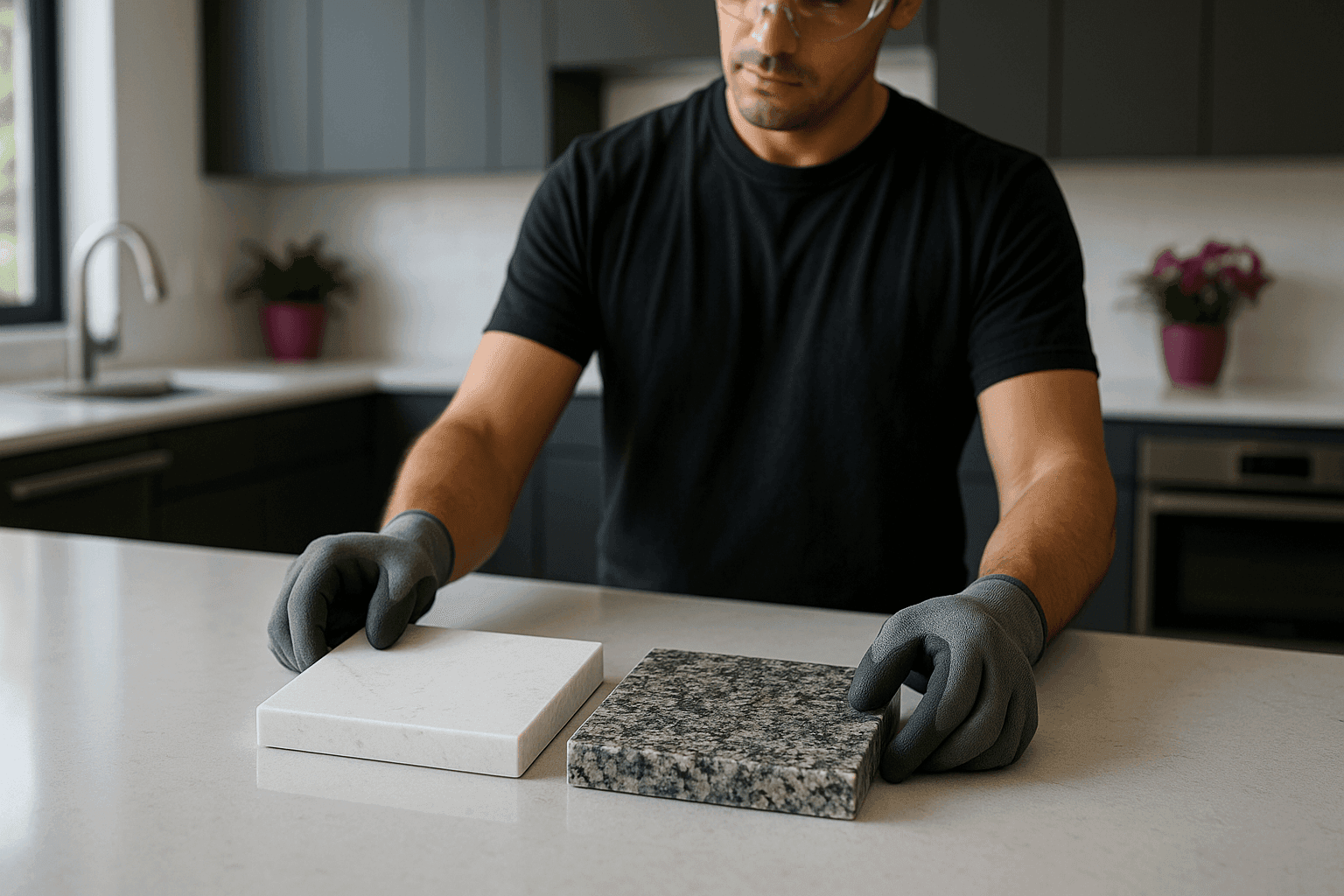
Thinking about a kitchen_remodeling project? The countertop decision looms large. Quartz or granite? Both are beautiful, sturdy, and popular, but the differences matter, especially for busy homes and high-traffic commercial kitchens.
At Kitchens By Connie, we’ve seen trends come and go—but the quartz vs. granite debate remains. Here’s what you need to know to choose the right surface for your space, style, and day-to-day life.
Material Overview
Quartz and granite—two stones, two stories.
Quartz countertops are engineered stone. Manufacturers blend around 90–95% crushed natural quartz with resins and pigments. The result? A nonporous slab that looks like natural stone but with extra consistency and strength.
Granite countertops are cut from solid stone, born deep in the earth’s crust. Each slab is unique, showcasing swirls, flecks, and colors created over thousands of years. No two pieces are ever the same.
Both materials are heavyweights in kitchen_remodeling for their durability, but their construction makes a difference in daily use.
Durability and Maintenance 🛠️
Life in a kitchen is demanding. Hot pans. Sharp knives. Spilled coffee. How do quartz and granite hold up?
Quartz
- Strength: Quartz is tough as nails, with uniform strength throughout. The resin makes it flexible and crack-resistant.
- Stain resistance: Nonporous, so wine, oil, and coffee won’t seep in. Wipe spills with a damp cloth—done.
- Scratch resistance: Very good, but not immune. Use a cutting board to protect the surface.
- Heat: The resin can discolor if exposed to hot pots. Always use trivets or pads.
Granite
- Strength: Granite is hard and dense. It stands up to impacts better than most surfaces.
- Stain resistance: Naturally porous, so sealing is a must. Annual resealing keeps stains at bay.
- Scratch resistance: Excellent. You’re more likely to dull your knives than scratch the stone.
- Heat: Resistant to high temps. Set down a hot pan and granite barely notices.
Maintenance tip: Quartz wins for low-fuss care. Granite needs periodic sealing but rewards you with natural resilience.
Visual Appeal and Customization 🎨
Is your style classic, modern, or somewhere in between? Countertops set the tone.
Quartz
- Consistency: Uniform color and pattern. Great if you want a seamless, controlled look.
- Colors: Hundreds of options—from pure white to concrete gray, even bold blues or reds.
- Edges: Easy to customize—waterfall, beveled, rounded, or square.
Granite
- Uniqueness: Each slab is a fingerprint of the earth. Expect dramatic veining, color shifts, and natural movement.
- Colors: Earthy tones dominate—black, white, green, gold, pink. Some rare granites are truly exotic.
- Edges: Custom shapes possible, but irregular patterns may limit some designs.
Pro tip: Visit a stone yard to hand-pick your granite slab. For quartz, samples are true to the installed product.
Cost Breakdown 💲
Price matters, but so does long-term value.
Quartz Countertops
- Material cost: Typically $60–$150 per square foot installed.
- Extras: Edge profiles and cutouts add to the cost.
- Upkeep: Virtually no maintenance expenses.
Granite Countertops
- Material cost: Ranges from $40–$200 per square foot installed, depending on rarity and origin.
- Extras: Unique slabs can be pricier. Budget for annual sealing.
- Upkeep: Minor cost for sealant and occasional care.
Budgeting tip: Consider the full picture—installation, maintenance, and the expected lifespan. Both materials can outlast most kitchen appliances.
Which is Right for You?
Still torn? Think about how you live and work.
- Busy families and high-traffic kitchens: Quartz is worry-free. Less maintenance, excellent stain protection.
- Natural stone lovers: Granite offers one-of-a-kind beauty. If you don’t mind a little upkeep, its character is unmatched.
- Eco concerns: Quartz production often uses recycled materials. Granite is natural but quarrying has a footprint.
Both quartz and granite are heat-resistant, but climate matters, especially where you live. In humid or freeze-thaw environments, quartz’s flexibility can be a plus—less chance of cracking or discoloration.
Climate & Seasonal Considerations 🌦️
Countertops face more than just kitchen messes—they’re affected by the world outside.
- Humidity: Quartz’s nonporous nature makes it a champ in humid climates. Granite may absorb moisture if not sealed.
- Temperature swings: Both handle indoor temps well. But in spots with big seasonal shifts, quartz may flex slightly more without cracking.
- Direct sunlight: Prolonged exposure can fade or yellow some quartz counters. Granite is more UV-stable, making it a better pick for sun-drenched kitchens or outdoor spaces.
Local tip: If your area sees wide seasonal swings, ask about climate-resilient sealants and installation techniques that allow for expansion and contraction.
Practical Decision-Making Tips
- Test samples at home: Lighting changes everything. Bring samples into your kitchen before deciding.
- Think about resale: Both add value, but buyers often appreciate quartz for its easy care.
- Don’t skip professional installation: Precise measurement and leveling are critical. Poor installation can lead to cracks, uneven seams, or damage to cabinets and appliances.
The National Kitchen & Bath Association (NKBA) recommends professional installation for both quartz and granite, especially when integrating sinks, backsplashes, or appliances.
Addressing Common Misconceptions
- Myth: Granite is indestructible. Reality: It can chip or crack if stressed.
- Myth: Quartz isn’t “real stone.” Reality: It’s mostly natural quartz, just engineered for consistency.
- Myth: You never have to seal granite. Reality: Regular sealing is the best insurance.
- Myth: Quartz can’t handle heat. Reality: It’s heat-resistant, but not heat-proof—always use protection.
Frequently Asked Questions
How do I clean my quartz or granite countertops?
Use mild soap and water. Avoid harsh chemicals and abrasive pads. For granite, reseal as directed.
Will quartz or granite increase my property value?
Both are considered premium upgrades in kitchen_remodeling and can boost appeal for future buyers or tenants.
Can I install countertops myself?
DIY is risky. These materials are heavy and require specialized tools. For safety and longevity, professional installation is best.
What’s the typical lifespan?
With proper care, both can last decades—often longer than the cabinets they rest on.
When to Call the Pros
Planning a major kitchen_remodeling project? If your plans include new countertops—plus plumbing, electrical work, backsplash installation, or appliance upgrades—professional project management saves headaches and ensures compliance with building codes. Kitchens By Connie’s team handles everything from permitting to final inspection, so nothing falls through the cracks.
Final Thoughts
Quartz and granite have both earned their place at the top of the kitchen_remodeling world. Your choice comes down to priorities: minimal maintenance and consistency (quartz) or natural uniqueness and tradition (granite).
Still have questions? Need a second opinion or a design consultation?
Call Kitchens By Connie now — or reach us anytime at 877-753-8750 .